Home / Articles
Treatment for Hyperpigmentation Due to Hormonal Changes
Home / Articles
Treatment for Hyperpigmentation Due to Hormonal Changes
A dermatologist-guided, science-first approach from a Gangnam clinic that treats pigmentation every day
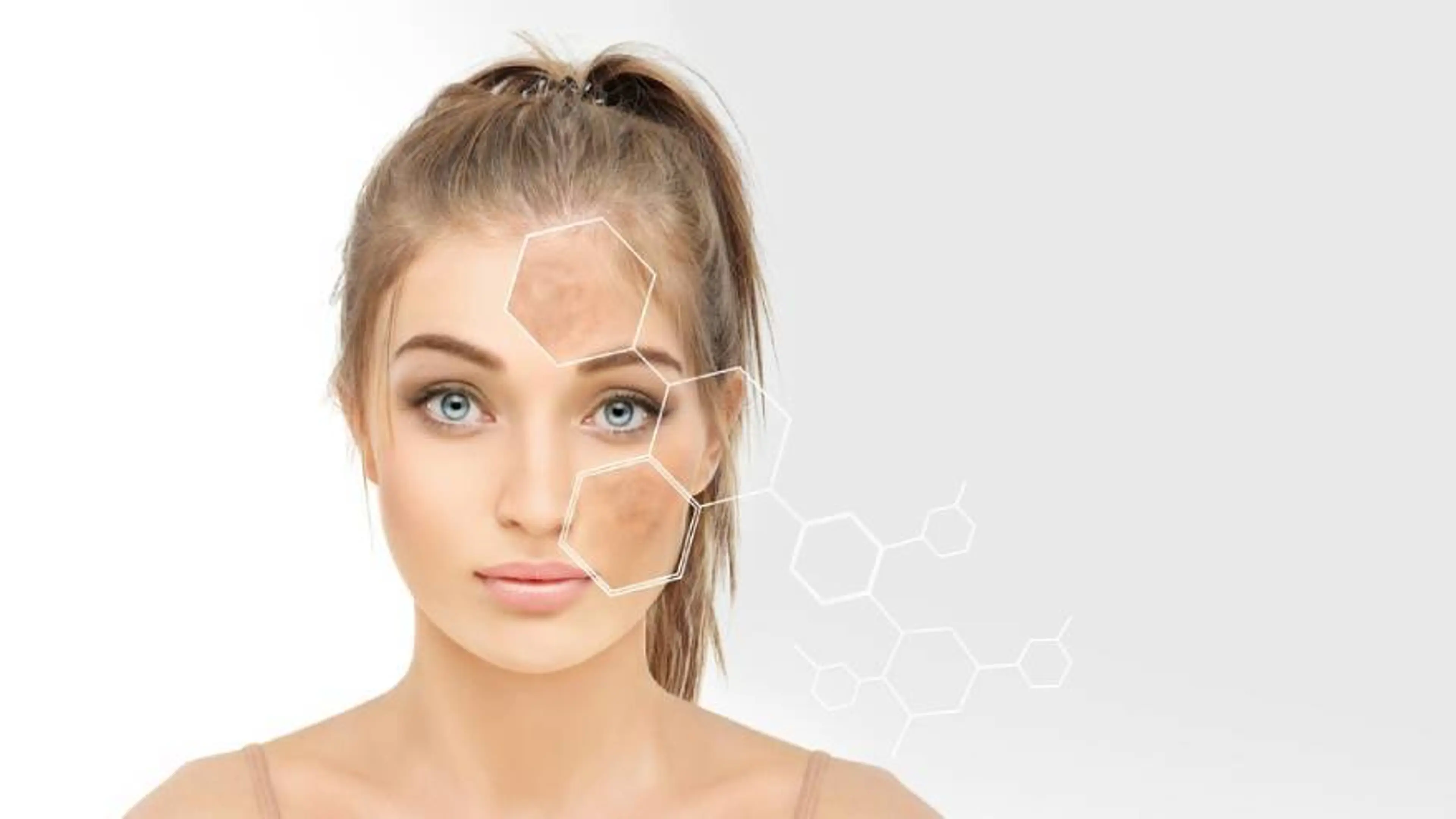
Hormonal hyperpigmentation has a way of testing even the most diligent skincare routines.
The most recognized form is melasma, but hormonal influence can also worsen or prolong:
Post-inflammatory hyperpigmentation (PIH)
Diffuse facial darkening
Patchy pigmentation on the cheeks, forehead, temples, or around the mouth
Persistent dullness or uneven tone that does not respond to brightening products
Unlike freckles or age spots, hormonal pigmentation often appears symmetrically and follows recognizable facial patterns. This symmetry is one of the key clues dermatologists use to identify hormone-driven pigment rather than purely sun-induced discoloration.
Pregnancy (“the mask of pregnancy”)
Oral contraceptives
Hormone replacement therapy
Thyroid imbalance
Perimenopause and menopause
Chronic stress affecting cortisol regulation
This is why pigmentation can continue to worsen despite good skincare habits and diligent sunscreen use.
A comparison we often use with patients is this: hormonal pigmentation is like a shadow woven into fabric, not dust on the surface. You can’t simply wipe it away—you need to carefully rework the structure beneath it.
This explains why aggressive lasers, strong peels, or excessive exfoliation sometimes produce short-term brightening followed by darker rebound pigmentation. The treatment may temporarily disrupt pigment, but it also triggers inflammation that reactivates melanocytes.
Before any laser or device-based treatment is considered, dermatologists perform a detailed evaluation that includes:
Pigment depth (epidermal, dermal, or mixed)
Facial distribution patterns characteristic of hormonal influence
History of pregnancy, fertility treatment, contraceptive use, or menopause
Current skincare habits and prior treatments
Skin sensitivity, redness tendency, and barrier integrity
Proper diagnosis is not just a formality. It determines:
Whether lasers are appropriate at all
Which devices are safest
How slowly treatment should progress
How maintenance should be structured
Skipping this step increases the risk of chronic pigment recurrence.
Prescription-grade topical therapy is the cornerstone of hormonal pigmentation management, especially in the early phase.
Depending on the patient’s skin type and pigment pattern, dermatologists may prescribe:
However, this stage is critical. Stabilizing pigment activity and repairing the skin barrier dramatically reduces the risk of rebound pigmentation once procedural treatments are introduced.
In our experience, patients who commit to this foundational phase achieve more sustainable results—and require fewer procedures overall.
Despite popular marketing, stronger or more frequent laser treatments do not necessarily lead to better outcomes for hormonal pigmentation.
Low-fluence laser toning
RF microneedling focused on dermal remodeling
Gentle pigment-modulating devices with precise heat control
These treatments are designed to:
Calm melanocyte overactivity rather than destroy pigment aggressively
Improve dermal support, which stabilizes pigment distribution
Enhance penetration of topical agents without excessive inflammation
This is why spacing, energy level, and patient selection matter more than treatment intensity. Successful pigmentation care often looks slow and conservative—but delivers longer-lasting clarity.
Long-term success depends on a maintenance strategy that includes:
Daily broad-spectrum sunscreen with protection against visible light
Ongoing use of pigment-suppressing topicals several nights per week
Periodic low-intensity treatments to maintain stability
Seasonal skincare adjustments to account for humidity, UV exposure, and skin sensitivity
Patients who stop all treatment once pigment improves are the most likely to experience relapse. Maintenance is not a sign of failure—it’s a reflection of how hormonally driven pigmentation behaves.
When managed correctly, pigmentation can remain stable and subtle, rather than progressive and noticeable.
Patients frequently ask about vitamin C serums, tranexamic acid products, LED masks, or at-home laser devices.
Used too early or incorrectly, they may:
Compromise the skin barrier
Increase inflammation
Trigger rebound hyperpigmentation
Dermatologist evaluation is strongly recommended if:
Pigmentation appeared or worsened after pregnancy or hormonal therapy
Dark patches repeatedly return after treatment
Makeup no longer conceals uneven tone
Skin reacts easily to products or procedures
Pigment appears gray-brown rather than light brown
Early intervention can prevent pigment from becoming chronic and more resistant over time.
In Korean beauty culture, expectations for flawless, even-toned skin are high—sometimes unrealistically so. Patients often feel discouraged when pigmentation doesn’t respond quickly.
What we gently remind them is this:
With proper diagnosis, thoughtful pacing, and consistent maintenance, hormonal hyperpigmentation can improve significantly—often more than patients initially expect. But success depends on strategy, patience, and respect for the skin’s biology.
If pigmentation continues to return despite multiple products or procedures, the issue may not be resistance—it may be hormonal.
A dermatologist-led, hormone-aware treatment plan that prioritizes skin stability will always outperform aggressive, one-size-fits-all solutions.