Introduction
introduction:-aging-gracefully-not-artificiallyIf you live in Seoul — especially in areas like Gangnam or Seocho — you’ve probably noticed how common mole removal treatments are. From tiny beauty marks to raised moles that catch on clothing, many people choose to remove them for both aesthetic and medical reasons. But not all mole removal methods are created equal, and the safest approach depends on the type, depth, and nature of the mole itself.
At Delight Dermatology Clinic, we often see patients who have tried at-home mole removal creams or cosmetic centers without a dermatologist’s supervision — only to end up with pigmentation, scarring, or recurrence. So today, we’d like to explain what really matters when it comes to safe and effective mole removal, based on both science and real-world dermatology experience.
Why People Choose to Remove Moles
why-people-choose-to-remove-molesNot all moles need to be removed. Many are harmless, and some even add character to a person’s appearance. However, there are three common motivations we see among our patients:
Aesthetic refinement – Especially in facial areas, some patients want smoother, more even-toned skin without protrusions or dark marks.
Physical discomfort – Raised moles that rub against clothing, jewelry, or razors can become irritated or bleed.
Medical precaution – Any mole that changes in color, size, or border needs to be evaluated to rule out skin cancer or atypical growth.
To be honest, what many people in Gangnam overlook is that even the smallest mole can carry diagnostic importance. Dermatologists don’t just remove; we assess — because distinguishing a harmless mole from a potentially dangerous one requires trained eyes and often a dermatoscopic examination.
Understanding Moles: What They Really Are
understanding-moles:-what-they-really-areA mole (or nevus) is essentially a cluster of pigment-producing cells called melanocytes. Depending on where these cells sit within the skin layers, moles can appear flat, slightly raised, or dome-shaped.
Epidermal moles – Found on the upper layer of the skin, usually flat or slightly raised.
Dermal moles – Deeper, often flesh-colored or slightly protruding.
Compound moles – Have both epidermal and dermal components, often darker and more textured.
This classification matters because it determines how deep the treatment must go. Removing only the surface of a dermal mole, for instance, might make it fade temporarily — but it will likely reappear in a few months.
Safe and Effective Mole Removal Techniques
safe-and-effective-mole-removal-techniques
At Delight Dermatology Clinic, we prioritize both aesthetic precision and medical safety. Here’s how we decide which technique to use for each mole type.
1. Laser Mole Removal
1.-laser-mole-removalBest for: Flat or slightly raised moles with no signs of malignancy.
How it works:
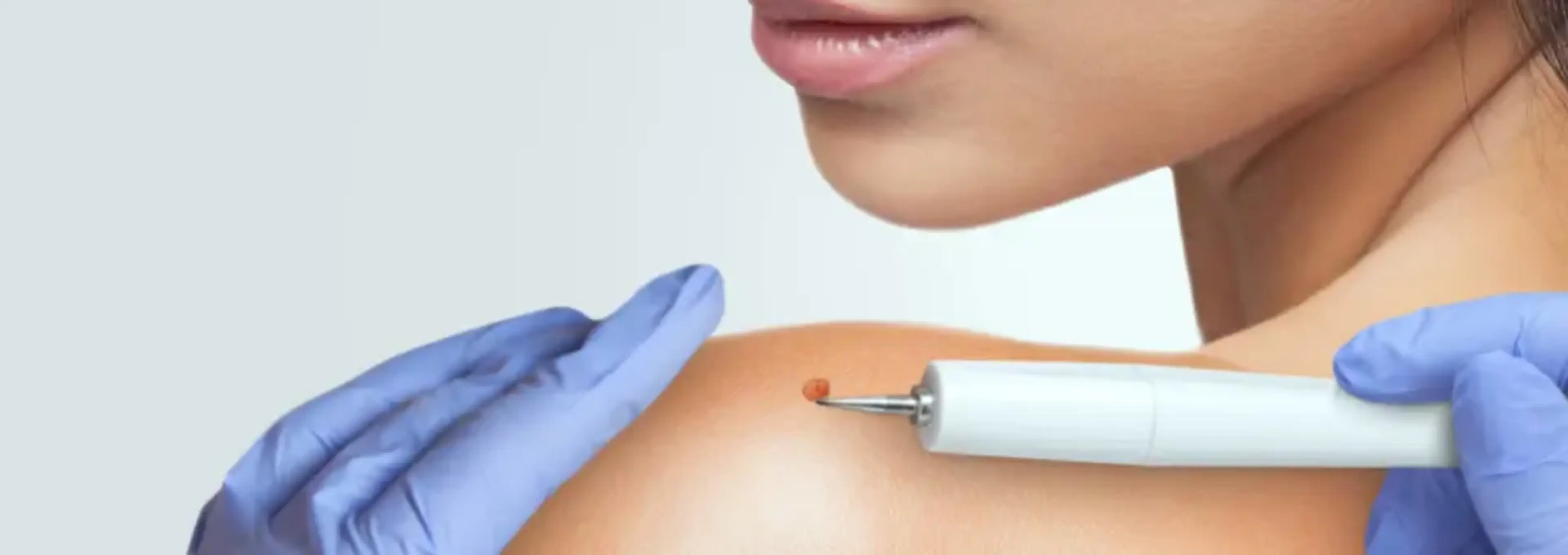
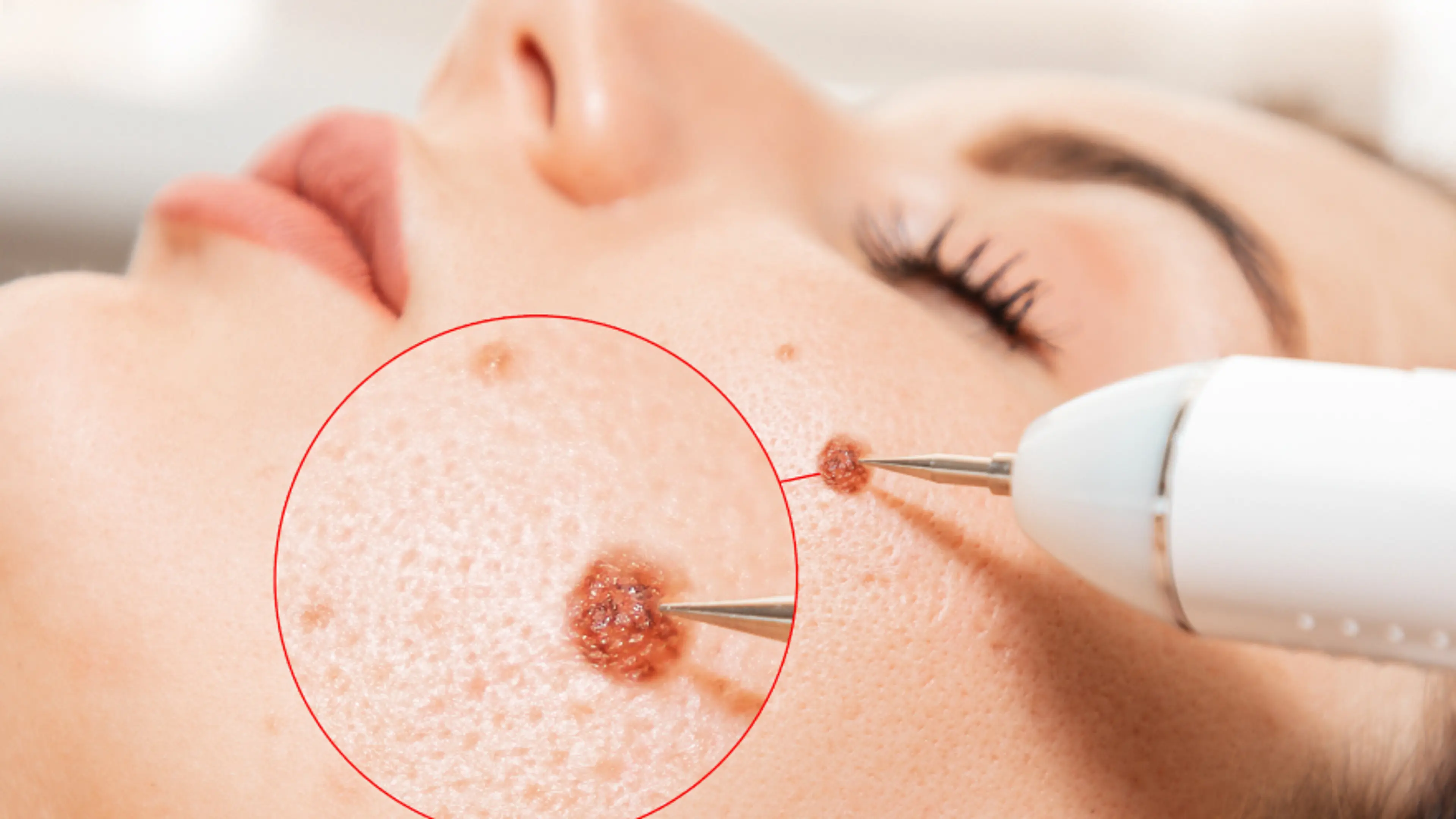
A specialized medical laser (such as a CO₂ or Er:YAG laser) vaporizes pigmented skin tissue in controlled, ultra-fine layers. It allows for high precision, minimizing damage to surrounding skin.
Advantages:
What to expect:
After treatment, a small scab forms and naturally peels off within 5–10 days. Mild redness or pigmentation can occur but usually resolves with proper aftercare and sun protection.
Dermatologist’s note:
In our clinic, we often combine laser removal with regenerative post-laser care, such as LED therapy or growth factor serums, to accelerate healing and minimize pigment rebound — something that over-the-counter treatments can’t achieve.
2. Surgical Excision
2.-surgical-excisionBest for: Deep, large, or suspicious moles requiring histopathologic examination.
How it works:
Under local anesthesia, the dermatologist carefully excises the mole along with a small margin of surrounding skin. The wound is then closed with fine sutures.
Advantages:
Complete removal, minimizing recurrence risk
Allows microscopic evaluation (biopsy) to ensure it’s benign
Recovery:
Sutures are typically removed in 5–7 days for facial areas, slightly longer for the body. Modern surgical techniques — such as layered closure and fine suturing — reduce visible scarring significantly.
Dermatologist’s insight:
At Delight Dermatology, Dr. Yun Sang Youl’s surgical training at Mayo Clinic emphasizes the “minimal scar approach” — aligning incision lines with natural skin tension lines to ensure the most discreet results possible.
3. Radiofrequency (RF) Mole Removal
3.-radiofrequency-(rf)-mole-removalBest for: Small, raised moles and skin tags.
How it works:
Radiofrequency energy gently vaporizes the targeted tissue with heat, while coagulating small blood vessels simultaneously.
Advantages:
RF removal is often preferred for delicate areas such as eyelids or around the lips, where even a millimeter of excess removal could alter contour.
4. Shave Excision
4.-shave-excisionBest for: Dome-shaped or slightly raised moles that are benign.
How it works:
The dermatologist shaves the top part of the mole using a sterile blade after local anesthesia. The base may be cauterized to prevent bleeding and recurrence.
Advantages:
However, the key here is depth control. If too superficial, the mole can recur. If too deep, scarring increases. That’s why this seemingly simple technique still demands an experienced dermatologist’s judgment.
What Makes Mole Removal “Safe”?
what-makes-mole-removal-"safe"
Safety is not just about equipment — it’s about evaluation, execution, and aftercare. A medically safe mole removal process includes:
Proper diagnosis – Every mole should be examined dermatoscopically to exclude malignancy.
Sterile conditions – All procedures should be done under medical-grade asepsis, not in cosmetic spas.
Experienced operator – The precision of removal determines long-term cosmetic outcome.
Tailored wound care – Sun protection, scar prevention gels, and pigment control treatments all contribute to final results.
At Delight Dermatology Clinic, we never rush through mole removal. Each patient receives a personalized safety check, including mole mapping when needed. For suspicious lesions, we recommend excision with biopsy before any aesthetic treatment.
Common Mistakes to Avoid
common-mistakes-to-avoidEven though mole removal seems like a simple procedure, many patients unknowingly make choices that compromise their skin’s safety.
Using at-home mole removal creams or acids – These often cause chemical burns, scarring, and unpredictable pigment loss.
Visiting non-medical cosmetic centers – Without proper diagnosis tools, dangerous moles can be mistakenly lasered.
Skipping sun protection – Newly healed skin is photosensitive; UV exposure can cause post-inflammatory pigmentation.
Expecting instant perfection – Skin remodeling takes time. Even with the best technology, final skin tone often evens out over weeks, not days.
How to Prepare and Care for Your Skin
how-to-prepare-and-care-for-your-skinBefore treatment:
Avoid tanning or chemical peels for at least one week.
Discuss your medical history and allergies with your dermatologist.
Ask whether your mole requires biopsy or can be safely removed by laser.
After treatment:
Keep the area clean and avoid touching the scab.
Apply prescribed ointments as directed.
Use SPF 50+ daily to prevent pigmentation.
Schedule follow-up visits for wound monitoring and laser toning if necessary.
At Delight Dermatology, we often pair mole removal with skin regeneration sessions — such as LED healing therapy or exosome-infused aftercare — to promote smoother recovery and even tone.
What Many Patients Don’t Realize
what-many-patients-don't-realizeTo be honest, one of the most common misconceptions we encounter is that mole removal is purely cosmetic. In reality, it’s a medical procedure.
We’ve seen cases where a mole thought to be “just dark” was actually an early melanoma. Conversely, patients often fear removing moles because they’ve heard of scarring — when, in the hands of a skilled dermatologist, the risk is minimal.
Your skin deserves precision, not shortcuts. The goal isn’t just to erase a spot, but to preserve the natural beauty and integrity of your skin.
The Delight Dermatology Approach
the-delight-dermatology-approachEvery treatment should enhance skin health as much as appearance.
That’s why each mole removal procedure here includes:
Detailed skin analysis and dermatoscopic evaluation
Selection of optimal removal technique (laser, RF, or surgical)
Post-procedure pigmentation management and scar prevention program
Whether you’re managing multiple small facial moles or removing one large, bothersome nevus, we ensure results that look natural, healthy, and clean.
When to See a Dermatologist Immediately
when-to-see-a-dermatologist-immediatelyIf your mole shows any of the following, book a medical evaluation right away:
Rapid growth or change in color
Irregular or blurred borders
Itching, bleeding, or crusting
New moles appearing after age 30
These can be early warning signs of atypical or malignant transformation. A dermatologist can perform dermatoscopic analysis or biopsy for accurate diagnosis.
Final Thoughts
final-thoughtsSafe mole removal is more than a cosmetic procedure — it’s an intersection of medical science, aesthetics, and patient trust. With the right evaluation, skilled technique, and thoughtful aftercare, mole removal can restore not only smoother skin but also peace of mind.
If you’ve been considering removing a mole — whether for beauty or comfort — consult a qualified dermatologist who values both
safety and subtlety.
In Gangnam, clinics like
Delight Dermatology offer world-class expertise, advanced devices, and tailored care to help your skin heal beautifully and confidently.