Home / Articles
Non-Surgical Nose Reshaping: What You Need to Know
Home / Articles
Non-Surgical Nose Reshaping: What You Need to Know
From the dermatology team at Delight Dermatology Clinic, Gangnam
Unlike makeup or skincare, the nose isn’t something you can easily camouflage. It appears in every conversation, every photo, every reflection. Even subtle irregularities can affect how balanced or refined the entire face feels.
This request is especially common among patients in their 30s to 50s — professionals, parents, frequent travelers — people who want to look polished and confident, not dramatically different.
Let’s walk through what you truly need to know before considering non-surgical nose reshaping.
Rather than “making the nose smaller,” fillers help by:
Raising a depressed nasal bridge
Creating the illusion of a straighter profile
Improving light reflection along the nose
Balancing the nose with the forehead and chin
Think of it like restoring the underlying scaffolding beneath a building. When the structure is supported in the right places, the entire façade appears cleaner and more refined.
Raising a low or flat nasal bridge
Camouflaging a mild hump by smoothing the profile
Improving symmetry after previous surgery
Creating a sharper nose line for photos and frontal view
Enhancing facial harmony without surgery
Not every nose — or every patient — is suited for non-surgical reshaping. A proper consultation should feel like an evaluation, not a sales pitch.
Those with mild humps or uneven nasal lines
Individuals who want subtle refinement rather than dramatic change
Patients not ready for surgical downtime or recovery
Non-surgical reshaping is particularly appealing for patients who want to “test” a new nose profile before considering surgery — or who simply want improvement, not permanence.
Significant nasal deviation or functional breathing issues
Extremely thin nasal skin with little soft tissue coverage
Patients expecting surgical-level transformation from fillers
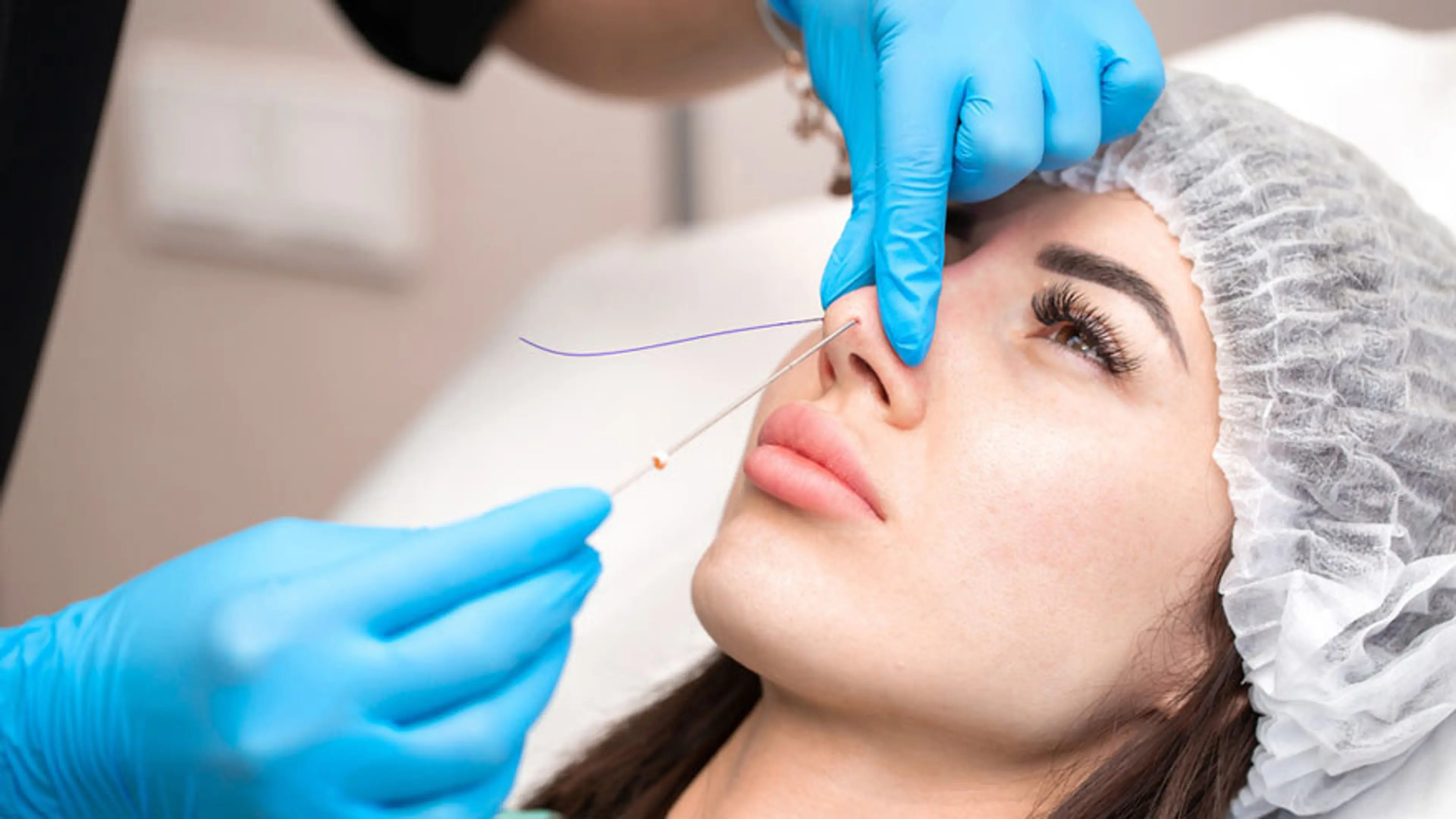
Here’s how it is typically performed at a dermatologist-led clinic:
Before any injection, the dermatologist evaluates:
Overall facial proportions (forehead–nose–chin balance)
Skin thickness and elasticity
Nasal structure and previous treatments
Major vascular pathways
This step is critical. The nose contains blood vessels that connect to the eyes and surrounding tissues. Understanding individual anatomy is essential for both safety and aesthetics.
Not all fillers are appropriate for the nose.
A nasal filler must:
Maintain shape under pressure
Integrate smoothly without spreading
Be fully reversible
Hyaluronic acid fillers are preferred because they allow for adjustment and reversal if needed — a non-negotiable safety factor in high-risk areas like the nose.
The filler is placed:
Deep, close to the bone
In very small, controlled amounts
Along precise anatomical planes
Experienced injectors prioritize shape, alignment, and balance rather than volume.
Results are visible immediately, but refinement happens in real time. Small adjustments ensure symmetry, smoothness, and harmony with the rest of the face.
Patients are usually able to return to daily activities right away, with only minimal swelling or tenderness.
Let’s address the uncomfortable truth.
This does not mean it is unsafe — it means it must be treated with appropriate seriousness and expertise.
Vascular occlusion
Skin necrosis
Asymmetry or overcorrection
Visual complications (extremely rare, but serious)
This is why:
Emergency protocols and reversal agents must be immediately available
Clinics should never rush or minimize consultation time
A successful non-surgical nose reshaping result should:
Enhance facial balance rather than dominate it
Feel firm yet flexible
Blend smoothly with the forehead and nasal tip
In Korean beauty culture — particularly among patients in their 30s to 50s — the ideal outcome is subtle elegance. A nose that looks clean, straight, and effortless, rather than “done.”
Minimally invasive
Little to no downtime
Temporary and adjustable
Lower upfront cost
Results depend heavily on injector expertise
Invasive surgery
Longer recovery and swelling period
Permanent structural change
Higher cost and commitment
Limited adjustability after healing
Some patients eventually choose surgery. Others prefer ongoing filler maintenance. Neither path is superior — what matters is choosing the approach that aligns with your anatomy, lifestyle, and comfort level.
Patients who chase an “ideal” nose in one session often end up disappointed or overtreated. Those who approach the process gradually — with conservative enhancement and periodic reassessment — almost always achieve better long-term results.
When performed thoughtfully by a board-certified dermatologist who understands facial anatomy and aesthetic balance, non-surgical nose reshaping can be:
Elegant
Safe
Confidence-boosting
Remarkably natural
But it is not a trend-driven beauty treatment. It requires medical expertise, restraint, and long-term planning.
If you’ve been considering nose filler but feel uncertain, that hesitation is healthy. Ask questions. Seek expert evaluation. Choose clinics that prioritize anatomy, safety, and individualized care over quick results.