Home / Articles
How to Achieve Healthy, Balanced Skin with IV Therapy
Home / Articles
How to Achieve Healthy, Balanced Skin with IV Therapy
Expert Insights from Delight Dermatology Clinic in Gangnam, Seoul
On any given week at our clinic in Seocho, we meet patients who have tried nearly every topical product under the sun—brightening serums, antioxidant creams, at-home LED masks—yet still feel their skin looks “tired,” “dull,” or “imbalanced.”
At Delight Dermatology Clinic, where we combine Mayo-Clinic-trained dermatology with Korean aesthetic precision, we view IV therapy as a supportive tool — a way to nourish the body from within while we address deeper issues like pigmentation, inflammation, collagen loss, or chronic acne.
Let’s break down what IV therapy actually does, why it helps certain patients, and how we integrate it safely into long-term skin programs in Gangnam.
But here’s what many people overlook:
IV therapy does not directly whiten or “magically transform” skin.
What it can do is create a physiological environment where skin can repair, regenerate, and function optimally.
Think of it like providing high-quality building materials for a house we’re renovating. Without the right internal nutrients, external procedures like lasers, peels, and RF treatments have a slower recovery and weaker results.
When these are disrupted, patients commonly experience:
In Gangnam, many patients juggle intense work schedules, frequent travel, irregular meals, and high UV exposure—all of which gradually drain the body’s resources.
This is where medical IV therapy becomes meaningful.
Antioxidants like vitamin C and glutathione help neutralize free radicals—those invisible “rusting agents” produced by stress, UV exposure, and lack of sleep.
When our antioxidant stores run low, skin appears uneven and dull, similar to a canvas collecting subtle shadows over time.
IV antioxidants can replenish these stores more quickly than oral supplements, giving the skin a better environment for brightening and repair.
IV vitamin C helps:
Encourage more stable collagen formation
Improve wound healing after procedures
Reduce redness post-laser
This is especially useful for patients starting Thermage, Ulthera, or Potenza programs at our clinic.
Inflammation is one of the biggest culprits behind acne flares, redness, and pigmentation rebound.
Certain IV infusions contain ingredients that:
Calm inflammatory pathways
Support immune regulation
Reduce oxidative stress
We often see patients who, after months of stress, develop reactive, easily flushed skin. Supporting the system internally helps break this cycle.
Some patients—especially those who drink little water or consume coffee throughout the day—simply have dehydrated skin from the inside out.
IV hydration can:
Improve skin elasticity and suppleness
Enhance nutrient delivery to skin tissues
Support lymphatic drainage
Balanced hydration is the foundation of “healthy glow” skin.
This is why we often integrate IV therapy into:
Pigmentation correction programs
Acne-reduction plans
Anti-aging series (RF microneedling, HIFU, RF tightening)
Pre- and post-laser protocols
Based on our clinic’s experience, IV therapy tends to help these groups:
Melasma and post-inflammatory pigmentation often worsen with inflammation or oxidative stress. Supporting antioxidant levels makes topical and laser treatments more effective.
Gangnam’s late-night work culture, caffeine reliance, and irregular meals take a noticeable toll on skin.
Travel stress, dehydration, and disrupted sleep directly affect skin quality. IV hydration accelerates recovery.
A “pre-treated” internal environment supports cleaner healing and stronger collagen remodeling.
IV nutrients that stabilize inflammation can help calm the baseline skin state, making it more resilient.
To keep expectations healthy and medically sound:
It cannot “bleach” the skin.
It will not replace sunscreen, retinoids, or medical laser care.
It cannot erase deep wrinkles or lift sagging structures.
It is not appropriate for people with certain medical conditions (which we carefully screen for).
IV therapy is a supportive tool—not a cure-all.
Think of it as optimizing the internal environment so the skin you see externally can function at its best.
At Delight Dermatology Clinic, our approach is safety-forward and personalized.
We assess concerns—pigmentation, redness, dullness, acne—and check medical history to ensure suitability.
Depending on skin goals, we may combine:
Vitamin C
Glutathione (under medically appropriate guidelines)
B-complex vitamins
Amino acids
Hydration fluids
Antioxidants
Every ingredient is dosed conservatively and safely.
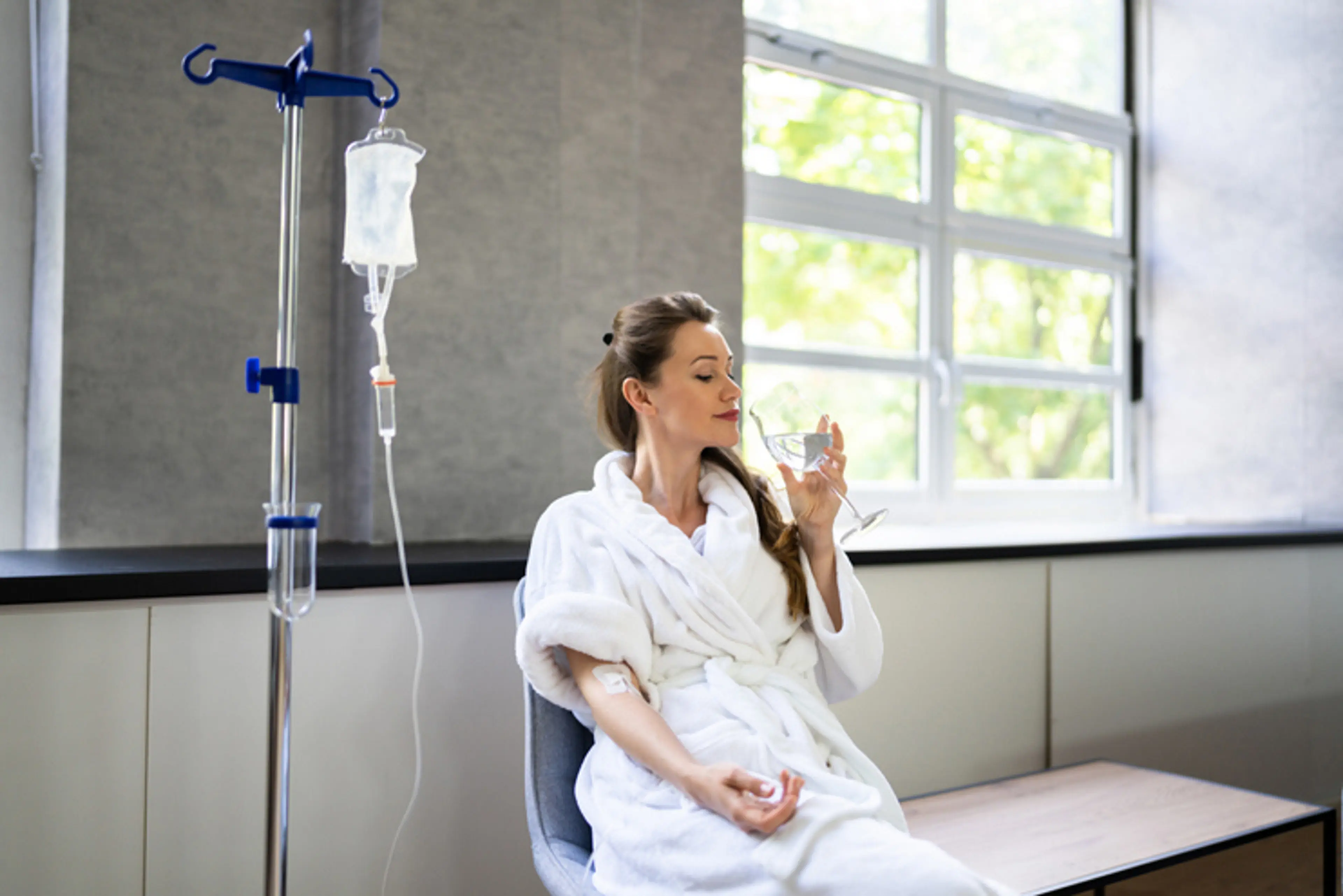
A nurse places a small, single-use catheter. The infusion usually takes 20–30 minutes. We monitor patients throughout.
We track your skin’s response—especially if part of a larger program involving lasers or RF treatments.
IV therapy is most effective when paired with:
Daily UV protection
Consistent medical-grade skincare
Targeted laser or RF devices when needed
Proper sleep and nutrition
Ongoing dermatologist check-ins
Patients commonly report:
Slight increase in brightness
Reduced fatigue in skin tone
Improved hydration/plumpness
More stable complexion
Less reactive redness
Improved recovery after procedures
A healthier, more even glow
Stronger overall skin resilience
Better results from lasers and anti-aging treatments
IV therapy may feel simple, but it requires:
Proper medical screening
Sterile technique
Knowledge of contraindications
Understanding of vitamin dosing safety
Emergency protocols (rare but essential)
Avoid salons, spas, or non-medical facilities offering “miracle drips.” Safety should always come before marketing claims.
You may benefit from IV therapy if:
Your skin feels persistently dull or tired
You’re dealing with pigmentation that doesn’t improve easily
You’re preparing for lasers, RF microneedling, or anti-aging procedures
Stress, travel, or lifestyle habits are affecting your complexion
You want to support internal balance while improving external skin treatments
If you’re unsure, that’s completely normal. Most of our patients ask similar questions before starting.
At Delight Dermatology Clinic, we view healthy skin as a long-term partnership, not a one-time fix. IV therapy isn’t the star of the show—but it often plays an important supporting role, especially for patients who want consistent, natural, glowing skin.
Balanced skin is never created by one cream or one machine. It’s the result of internal health, external care, and thoughtful guidance from trained specialists.
If you’ve been struggling with persistent dullness or pigmentation—or if you simply want your skin to function at its very best—consider consulting a dermatologist-led clinic that customizes both internal and external approaches.